What are dental veneers?
A veneer is a thin shell bonded to the front surface of a tooth to change its colour, shape, length or alignment. Most veneers today are made from one of two materials: porcelain (usually lithium disilicate ceramic, known by the brand name E.max) or composite resin, the same tooth-coloured material used for modern fillings.
Porcelain veneers are made in a dental laboratory and are typically 0.3 to 0.7 mm thick, roughly the thickness of a contact lens to a fingernail. They resist staining well and reflect light much like natural enamel. Composite veneers are sculpted directly on the tooth in the chair, usually in a single visit, and cost less, but they stain and chip more easily and need polishing or repair over the years.
Smile design is the planning that comes before either option. It is where we decide what your smile should look like, how many teeth are involved, and whether veneers are even the right tool, before a single tooth is touched.
The "Hollywood smile" in Egypt: what we would like you to know
Search for ابتسامة هوليود in Cairo and you will see very white, very even smiles, often 16 to 20 teeth covered at once. Some of these are excellent work. Others involve something patients are rarely told about: over-preparation, meaning a large amount of healthy enamel is ground away so that thick, opaque veneers can sit on top, or teeth are cut down for full crowns when veneers were requested.
Enamel does not grow back. Removing too much of it can expose the softer dentine underneath, weaken the bond, increase sensitivity and, in some cases, irritate the nerve to the point that a root canal treatment becomes necessary. Teeth that have been heavily reduced will also always need some kind of covering for the rest of your life.
Our approach is different in two ways. First, we prepare teeth only as much as the plan genuinely requires, and in suitable cases we use minimal-preparation or no-preparation veneers. Second, we choose a shade and shape that fit your skin tone, lips and age. A natural result usually means a slightly warmer white, gentle variation between teeth, and edges with a little translucency. You can read more in our guide to a natural Hollywood smile in Cairo and our answer to are veneers safe?
How Prof. Nouran plans your smile
Prof. Nouran Abdel Nabi is a Professor of Prosthodontics and Dental Implants at Cairo University. Prosthodontics is the specialty concerned with restoring and replacing teeth. That training matters for veneers, because a smile is not only about colour. Veneers have to work with your bite: how your teeth meet, how your jaw moves, and whether you clench or grind. A veneer that looks perfect but takes the force of the opposite tooth in the wrong place is the one that chips.
Planning therefore looks at three things together:
- Proportion: the width-to-length ratio of each tooth, the midline, and how much tooth shows when your lips are relaxed and when you smile broadly.
- Shade: a white that stays believable next to your skin and the whites of your eyes, and that matches any teeth that will not be covered.
- Function: the bite, gum health, and any habits such as grinding that change the choice of material or the need for a night guard.
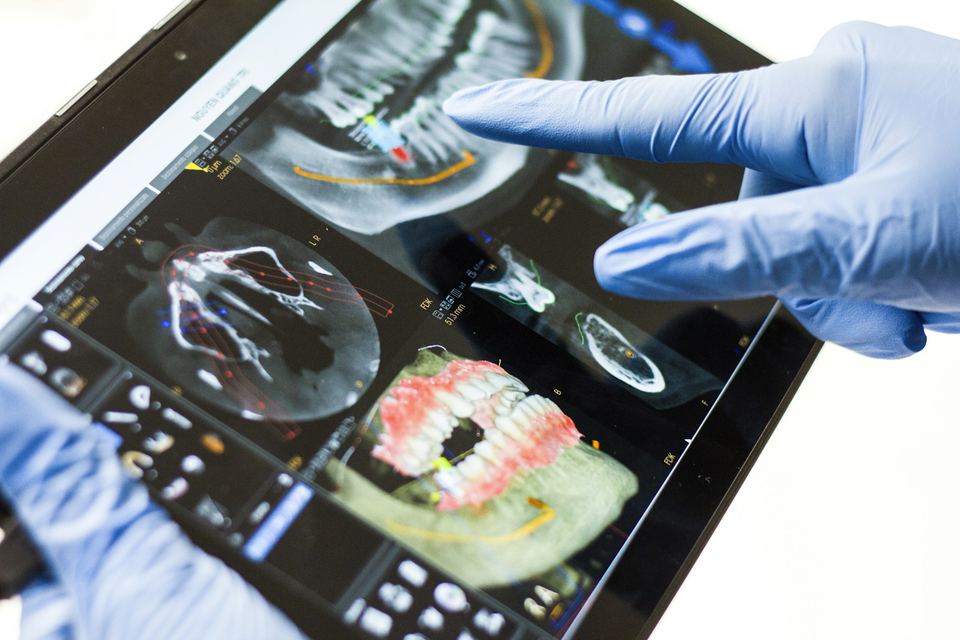
Using photographs, scans or impressions, we create a digital smile design and, where helpful, a wax-up and a temporary "mock-up" that you can try on in the mouth. You see and approve the proposed shape before anything irreversible is done.
Step by step: how veneer treatment works
- Consultation and examination. We check gums, existing fillings, decay and your bite. Problems such as gum inflammation or decay are treated first.
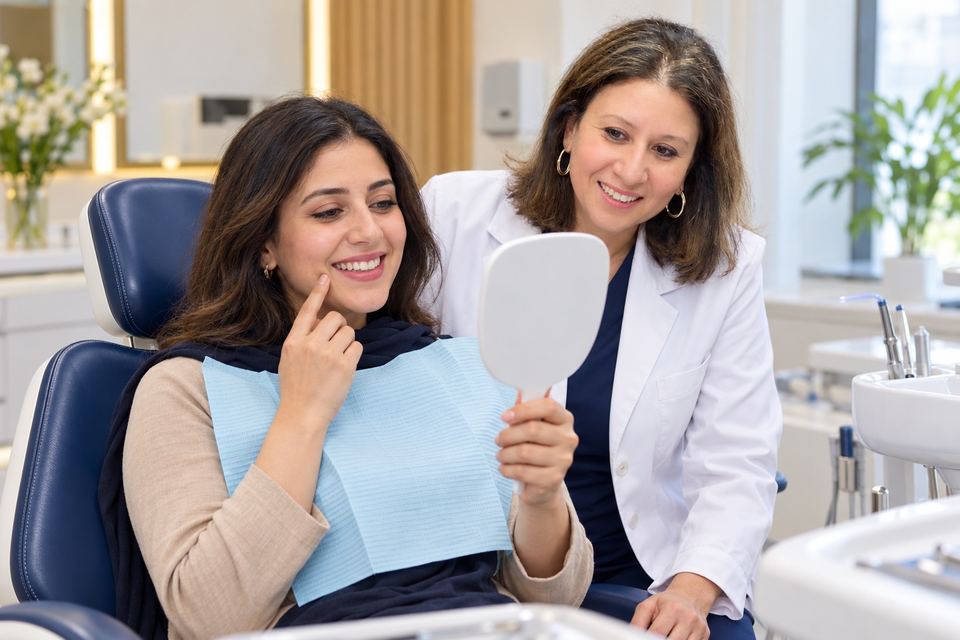
- Smile design and mock-up. Photos and scans become a proposed design; a mock-up lets you preview it on your own teeth.
- Whitening, if planned. If some teeth will stay uncovered, we often whiten first so the veneers can be matched to your new natural shade.
- Preparation and impressions. For porcelain veneers, a small amount of enamel is reshaped where needed, guided by the mock-up, then impressions or scans are sent to the laboratory. Temporary veneers may be fitted.
- Try-in and bonding. We check fit, colour and bite before bonding each veneer with a resin cement and adjusting the bite carefully.
- Review. A follow-up visit checks gums, bite and polish, and we discuss a night guard if you grind.
Porcelain veneers usually need two to three visits over about two to three weeks. Composite veneers can often be completed in one longer visit.
Who are veneers suitable for?
Veneers tend to work well for adults with healthy gums and sound teeth who want to improve:
- Teeth that are stained in a way whitening cannot shift, for example tetracycline staining or a single dark tooth
- Chipped, worn or slightly short front teeth
- Small gaps or mildly uneven edges
- Teeth that are small or oddly shaped compared with their neighbours
Who veneers are not right for
Being honest at this stage protects your teeth. Veneers are usually not the right choice if:
- You have active decay or gum disease that has not been treated
- Your teeth are significantly crooked or crowded; orthodontic alignment first is often kinder to the teeth than cutting them straight
- You grind heavily and are not willing to wear a night guard
- A tooth is heavily filled or root-treated; a crown may protect it better
- The main concern is colour alone and your enamel is healthy; teeth whitening may be all you need
- You are a teenager whose gums and teeth are still settling
Risks and limitations
Veneers are a well-established treatment, but they are not risk-free. Porcelain preparation is irreversible: once enamel is reshaped, the tooth will always need a veneer or similar covering. Teeth may feel sensitive to cold for a few days after preparation. Veneers can chip or debond, particularly with biting on hard objects or grinding. Gums can recede over time, revealing a margin line. Composite veneers in particular can discolour and need repolishing. A careful plan, a conservative preparation and good aftercare reduce these risks; they do not remove them.
Alternatives to veneers
- Whitening for colour concerns on healthy teeth.
- Composite bonding on one or two teeth to fix a chip or close a small gap.
- Orthodontics or clear aligners for crowding or rotation, sometimes followed by a few veneers.
- Crowns for teeth that are badly broken, heavily filled or root-treated.
- Gum contouring where a "gummy" smile or uneven gum line is the main issue.
What affects the cost of veneers in Cairo
As a rough guide, public listings in Cairo (October 2026) show veneers ranging from about 2,500 to 15,000 EGP per tooth. The lower end typically reflects composite veneers; laboratory-made E.max porcelain sits higher. Your own cost depends on:
- The material (composite, E.max or other ceramics) and the laboratory used
- How many teeth are included; many natural results need 6 to 10 upper teeth, not 20
- Preparatory treatment such as cleaning, fillings, whitening or gum work
- Whether a mock-up, temporaries or a night guard are needed
The exact cost can only be given after an examination. Please be cautious of offers that quote a full "Hollywood smile" price without seeing your teeth.
Aftercare: making veneers last
Brush twice daily with a non-abrasive fluoride toothpaste, and clean between teeth daily with floss or interdental brushes. Avoid biting directly into very hard things such as ice, nuts in shells or pens, and do not use your teeth to open packets. If you grind, wear your night guard. Regular checkups and cleaning let us spot small chips or gum changes early. With good care, porcelain veneers typically last many years; see how long veneers last for realistic ranges.
If you would like to see what your smile could look like before deciding anything, send us a photo and message us on WhatsApp to book a smile consultation.