What professional teeth whitening is
Teeth whitening (تبييض الأسنان) uses a peroxide gel, either hydrogen peroxide or carbamide peroxide, to break down the coloured molecules inside the enamel and the dentine beneath it. Nothing is removed from the surface of the tooth; the tooth itself becomes lighter. This is different from "whitening" toothpastes, which mostly polish away surface stain and can only make a modest difference.
Professional whitening matters for two reasons. First, the gel concentration is matched to your teeth and applied with protection for the gums. Second, a dentist checks that whitening is safe and worthwhile for you before it starts. Bleaching over untreated decay, leaking fillings or exposed roots can cause significant pain, and whitening a smile full of old fillings may leave you with a patchy result.
Which stains respond, and which do not
Whitening works most reliably on yellowish discolouration from age, tea, coffee, smoking, shisha and some foods. Brownish stains usually respond more slowly. Greyish discolouration, for example from tetracycline antibiotics taken in childhood, can be stubborn and may need longer treatment or a different approach.
Just as important is what whitening cannot change:
- Crowns, veneers, bridges and tooth-coloured fillings do not lighten. If you whiten, they will stay their original shade and may need replacing to match.
- A single dark tooth after a root canal or injury usually needs internal whitening from inside the tooth, or a veneer or crown.
- White spots and enamel defects can sometimes look more noticeable at first; they may need other treatments such as resin infiltration or bonding.
- Tooth shape, chips and gaps are not affected by whitening at all.
Our approach: check first, then whiten
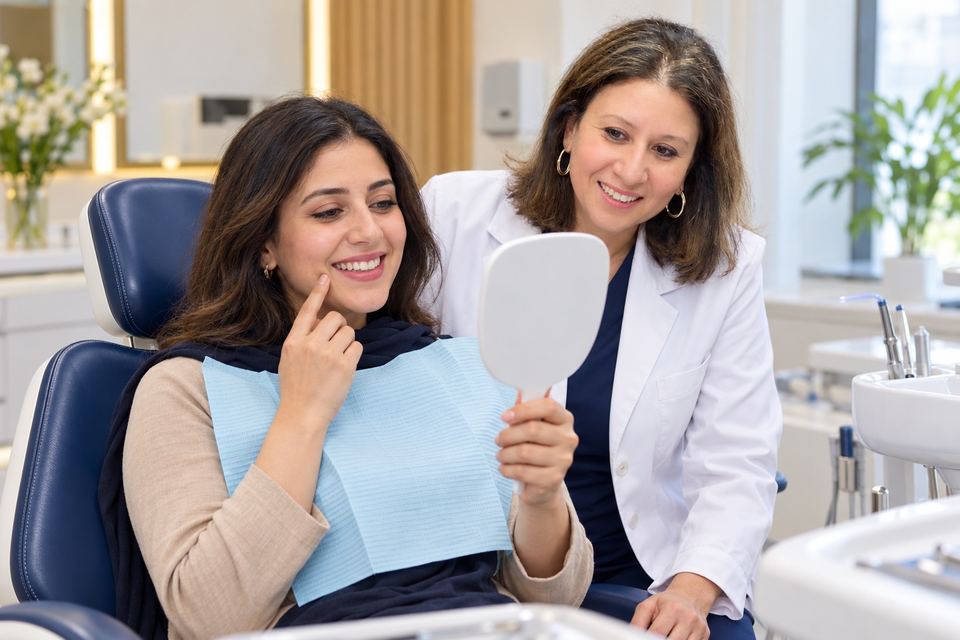
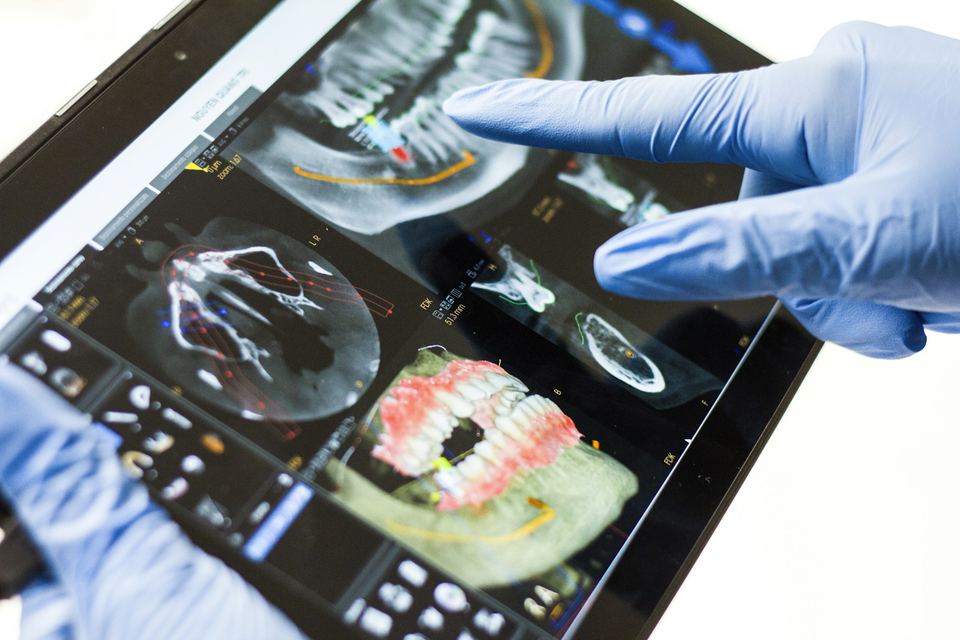
Every whitening plan starts with an examination. We look for decay, gum inflammation, worn enamel, exposed roots and old fillings, and record your current shade with a shade guide and photos. If you need a scale and polish or a small filling, that comes first; often a professional clean alone removes more surface stain than patients expect.
Prof. Nouran Abdel Nabi also thinks ahead. If you are planning veneers or crowns on visible teeth, whitening the natural teeth first lets the new restorations be made to match your brighter shade, instead of matching the old one and locking it in.
In-clinic whitening
In-clinic whitening uses a higher-concentration gel under close supervision. A typical visit takes about 60 to 90 minutes.
- Teeth are polished and the starting shade is recorded.
- Lips and cheeks are retracted and the gums are covered with a protective barrier.
- Whitening gel is applied in several short cycles, sometimes with a light, and checked between cycles.
- The gel is removed, the new shade is recorded, and a desensitising product may be applied.
The advantage is a noticeable change in a single visit, which suits people with an event coming up. The trade-off is that sensitivity is more common with higher concentrations, and the immediate result can look a little brighter than the shade that settles over the following days.
Take-home whitening
For take-home whitening we take impressions or scans and make custom trays that fit your teeth closely. You place a small amount of lower-concentration gel in the trays and wear them for a set time each day or overnight, usually for about two weeks, adjusting according to how your teeth respond.
Take-home whitening is gradual, generally gentler on sensitivity, and gives you control over the final shade. Many dentists regard it as the most predictable method. The trays can also be kept for occasional top-ups later. The trade-off is that it depends on wearing the trays consistently.
Combined whitening
A combination of one in-clinic session to start, followed by take-home trays, often gives the most even and stable result. It suits people who want a visible jump quickly but also want to fine-tune the shade.
How long whitening takes, and when to judge the result
With in-clinic whitening you see a change on the day, but teeth are slightly dehydrated straight afterwards and look whiter than they really are. The true shade settles over roughly one to two weeks. With take-home trays, most people notice a difference within the first few days and reach their result over about two weeks; stubborn stains can take longer.
That is why we compare against your starting photos at a review visit rather than in the mirror on day one, and why any new fillings, veneers or crowns are matched only after the shade has stabilised, usually about two weeks after you finish.
Sensitivity: what to expect and how we manage it
Temporary sensitivity is the most common side effect of whitening. It usually feels like short, sharp twinges, particularly to cold, and typically fades within a day or two of finishing. Some people also notice mild gum irritation where gel touched the gum.
We reduce sensitivity by checking for exposed roots and worn areas first, choosing an appropriate gel strength, using a sensitivity toothpaste for a couple of weeks before and during treatment, applying desensitising agents, and spacing sessions out when needed. Tell us early if your teeth feel sore; adjusting the plan is easy. For a fuller look at safety, read is teeth whitening safe?
Who whitening suits
Whitening suits most adults with healthy teeth and gums whose main concern is overall colour, especially natural teeth with yellowish tones and few visible fillings or crowns at the front.
Who whitening is not right for
- Children and younger teenagers, whose tooth nerves are still large
- Pregnant or breastfeeding women; we recommend postponing as a precaution (see dental treatment during pregnancy)
- People with untreated decay, gum disease or cracked teeth until these are treated
- Those with severe sensitivity, significant enamel wear or receding gums with exposed roots
- Anyone whose front teeth are mainly crowns or veneers, since these will not change
- People allergic to peroxide or any gel ingredients
Risks
When professionally supervised, whitening is considered safe for most people. The main risks are temporary sensitivity and gum irritation. Overuse, very frequent repeat bleaching or poorly fitting trays can increase these effects, and unregulated products bought online, some with unclear ingredients or very high concentrations, carry greater risk of gum burns and enamel damage. Results also vary: we cannot promise a particular number of shades, because every tooth responds differently.
Alternatives to whitening
- Professional scaling and polishing to remove surface stain and tartar
- Microabrasion or resin infiltration for certain white or brown spots
- Composite bonding for a single discoloured or chipped tooth
- Veneers or crowns for deep discolouration or where shape also needs changing
What affects the cost of whitening in Cairo
Public listings in Cairo (October 2026) show professional whitening ranging from roughly 2,500 to 6,000 EGP. Your cost depends on the method (in-clinic, take-home trays, or both), the number of sessions, whether a cleaning or fillings are needed first, and whether existing restorations will need replacing to match. We will confirm the cost after your examination.
Making your result last
Whitening does not last forever; teeth gradually pick up colour again. Most people keep a good result for many months to a few years, depending on habits. To make it last:
- For 48 hours after whitening, limit strongly coloured foods and drinks such as tea, coffee, cola, red sauces and beetroot
- Rinse with water after tea or coffee, and consider a straw for dark drinks
- Reduce or stop smoking and shisha, which stain quickly
- Keep up regular cleaning visits to remove surface stain
- Use your custom trays for short top-ups when advised, not on your own schedule
If you would like to know whether whitening will work for your teeth, message us on WhatsApp to book a quick check.