What general dentistry covers
General dentistry is the everyday care that keeps teeth and gums healthy: examinations, diagnosis, cleaning, fillings, gum treatment, extractions and prevention. It is also where most bigger treatments are avoided. A small cavity found at a checkup is a quick filling; the same cavity left for a year can become a root canal and a crown.
At our clinic in Maadi, general care is led by Prof. Nouran Abdel Nabi, whose research background is in prosthodontics, the restoration and replacement of teeth. In practice, that means we look at the whole mouth: not only the tooth that hurts, but your bite, your gums, your existing fillings and crowns, and what is likely to need attention over the coming years. You leave with a clear, prioritised plan instead of a list of surprises.
Dental checkups and diagnosis
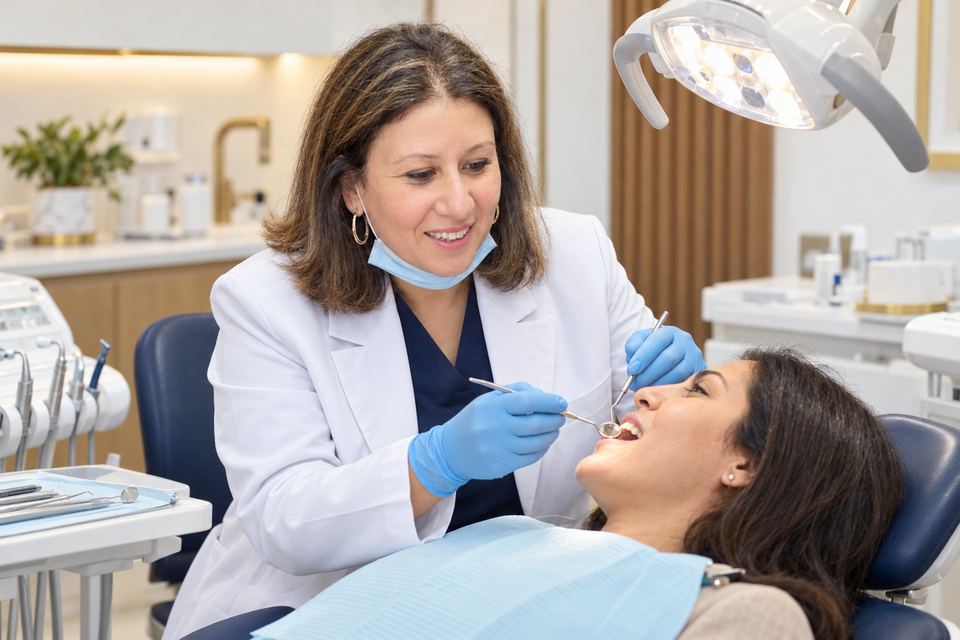
A checkup is more than a quick look. A thorough examination typically includes:
- A conversation about any pain, sensitivity, bleeding gums or concerns, plus your medical history and medications
- Examination of every tooth for decay, cracks, wear and failing fillings
- Gum assessment, including measuring the pockets around teeth where gum disease begins
- A check of the bite, jaw joints and signs of grinding
- A screening of the tongue, cheeks, palate and floor of the mouth for any unusual patches or lumps
- A clear explanation of what we found, what is urgent, what can wait, and what simply needs monitoring
How often you need a checkup depends on your risk. Many people do well with a visit every six to twelve months; those with gum disease, frequent decay or many restorations may benefit from more frequent visits. See how often should I see a dentist? and what to expect at your first visit.
Dental X-rays
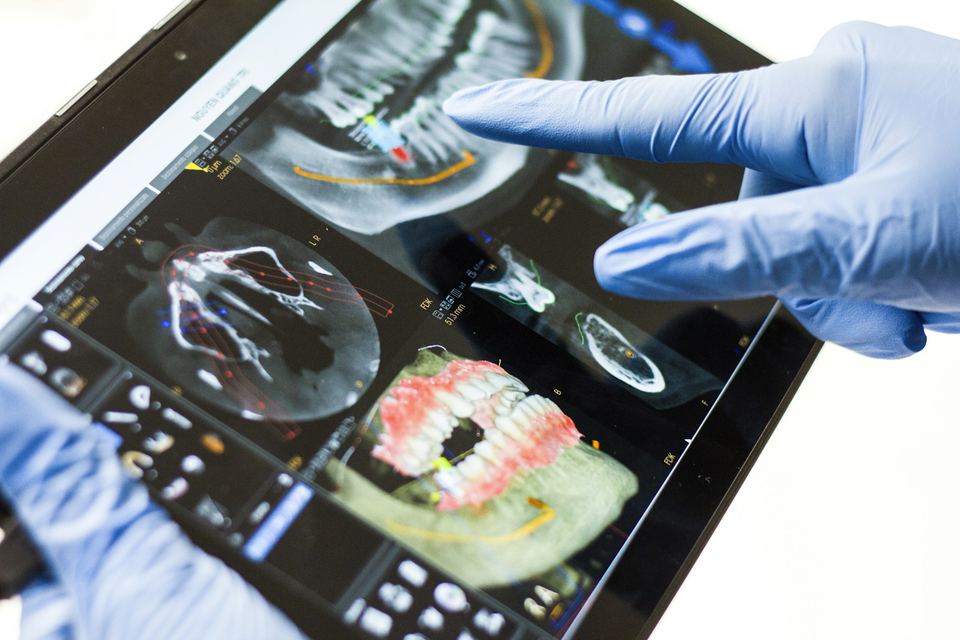
Many problems cannot be seen with the eye: decay between teeth, infection at the tip of a root, bone loss from gum disease, or a wisdom tooth growing at an angle. X-rays show these early. We take them only when they will change a decision, not as a routine on every visit.
- Bitewing X-rays show decay between back teeth and the bone level.
- Periapical X-rays show a whole tooth and its root tip, used for pain, root canals and infections.
- Panoramic X-rays show both jaws at once, useful for wisdom teeth and overall planning.
Modern dental X-rays use a very low dose of radiation. If you are or might be pregnant, tell us; non-urgent X-rays are usually postponed.
Scaling and cleaning (تنظيف الجير)
Even with good brushing, plaque in hard-to-reach areas hardens into tartar (calculus), which a toothbrush cannot remove. Tartar irritates the gums, causing bleeding, bad breath and, over time, gum disease and bone loss. Professional scaling removes tartar above and just below the gum line using ultrasonic and hand instruments, followed by polishing to remove surface stain from tea, coffee and smoking.
Most patients find cleaning comfortable; if your gums are inflamed or your teeth sensitive, we can numb the area. Gums may feel tender and bleed slightly for a day or two afterwards, which is normal as they heal. A clean is also the first step before teeth whitening or cosmetic work.
Gum care and treatment of gum disease
Gum disease is common and often causes no pain in its early stages. Gingivitis, gum inflammation with bleeding when brushing, is reversible with cleaning and better home care. If it progresses to periodontitis, the bone that holds the teeth starts to be lost, gums can recede and teeth may become loose. Smoking and diabetes make gum disease more likely and more severe.
Treatment depends on the stage. It may involve deep cleaning below the gum line (root surface debridement) under local anaesthetic, tailored brushing and interdental cleaning advice, and closer follow-up. Advanced cases may need referral for specialist gum treatment. Healthy gums are also essential before any implant, crown or veneer work.
Cosmetic tooth-coloured fillings
When decay is caught early, we remove only the damaged part of the tooth and rebuild it with composite resin, a tooth-coloured material that bonds to the tooth. Because it bonds, less healthy tooth usually needs to be removed than with older silver (amalgam) fillings, and the result blends with your natural teeth.
Composite fillings suit most small and medium cavities. Very large cavities, or teeth with cracks, are often better protected with an onlay or crown. Old amalgam fillings that are intact and healthy do not need to be replaced just for the sake of it; we replace them when they are broken, leaking or have decay around them, or if you have a cosmetic concern. See composite vs amalgam fillings.
Extractions, including wisdom teeth
Our first aim is always to keep a tooth when it can be predictably saved. Sometimes extraction is the right choice: a tooth broken below the gum, severe gum disease, a tooth with an infection that cannot be treated, or crowding before orthodontics.
Simple extractions are done under local anaesthetic. We explain each step, check that the area is fully numb, and give you written aftercare. Before removing a tooth, we also talk about what will replace it, if anything. A gap in the back can let other teeth tip and shift, and options such as an implant, bridge or denture are easier to plan from the start.
Wisdom teeth do not all need removing. We recommend removal when they cause repeated gum infections (pericoronitis), decay in themselves or the neighbouring tooth, cysts, or damage to the tooth in front. Impacted wisdom teeth, especially lower ones close to the nerve, may need a surgical approach or referral to an oral surgeon. Read when should wisdom teeth be removed?
Risks of extraction include swelling, bruising and discomfort for a few days, bleeding, and a painful "dry socket" if the blood clot is dislodged, which is more likely in smokers. Lower wisdom teeth carry a small risk of temporary or, rarely, lasting numbness of the lip or tongue; we assess this on the X-ray and discuss it beforehand.
Prevention for the whole family
Most decay and gum disease is preventable. As part of your visits we offer:
- Personalised home-care advice: brushing technique, fluoride toothpaste, and the right floss or interdental brushes for your gaps
- Diet advice: how often you have sugar matters more than how much; frequent sugary tea, juice and snacks keep teeth under constant attack
- Fluoride varnish for people at higher risk of decay
- Fissure sealants on suitable children's back teeth
- Night guards for people who grind, and sports mouthguards for active children and adults
For children, we aim to make early visits relaxed and positive. Bringing them along to a parent's checkup is a good start. Baby teeth matter too; they hold space for adult teeth, and decay in them can cause pain and infection.
Who general dentistry is for
Everyone. Children, adults, older patients with dentures or implants, and people who have avoided the dentist for years. If it has been a long time, there is no judgement; we start with a calm examination and a plan you can manage step by step.
When a different approach is needed
Some situations need more than general care: complex orthodontics, advanced gum disease, deeply impacted wisdom teeth or certain medical conditions. In those cases we explain why and refer you to the appropriate specialist, while continuing your routine care with us.
What affects the cost
Public listings in Cairo (October 2026) show consultations typically ranging from about 200 to 500 EGP. The cost of your treatment depends on what is needed: the number and type of X-rays, the extent of cleaning, the size and number of fillings, and whether an extraction is simple or surgical. We always explain the plan and cost before starting, and you can choose to stage treatment.
When to see us sooner
Do not wait for your next checkup if you have toothache, swelling, bleeding gums that do not settle, a broken tooth or filling, a loose adult tooth, or a mouth ulcer that has not healed within two weeks. Our guide to dental emergencies explains what to do in the meantime. To book a family checkup, message us on WhatsApp.