Short answer
Zirconia is typically chosen for back teeth and bridges because it is very strong and resists chipping. E.max (lithium disilicate) usually gives the most natural translucency for front teeth. Porcelain-fused-to-metal is an older, proven option but can show a grey margin. The right choice depends on the tooth, your bite and your aesthetic goals.

A crown is a cap that covers a weakened or damaged tooth to restore its shape, strength and appearance. Today most patients in Cairo choose between three materials: zirconia, E.max (lithium disilicate glass-ceramic) and porcelain-fused-to-metal (PFM). Each has a place. None is right for every tooth, and the honest answer to "which is better?" is: better for which tooth, in which bite, with which goal.
Below we explain how the three materials differ, where each one tends to work well, and how we decide with you at El Nabi Dental Clinic in Maadi.
The short version: strength vs translucency
Crown materials sit on a scale. At one end is strength (resisting fracture under chewing forces). At the other is translucency (letting light pass through the way natural enamel does). Zirconia sits closer to the strength end, E.max closer to the translucency end, and PFM combines a metal core for strength with porcelain on top for colour.
| Feature | Zirconia | E.max (lithium disilicate) | Porcelain-fused-to-metal |
|---|---|---|---|
| Typical strength | Very high; well suited to molars and bridges | High; suited to single crowns, especially front and premolar teeth | High; depends on the metal and porcelain layering |
| Appearance | Good; newer translucent grades look more natural, older grades can look opaque | Very natural translucency; often preferred for front teeth | Can look natural, but a grey line may show at the gum over time |
| Metal-free | Yes | Yes | No |
| Main risk | Can be hard to adjust; very opaque grades may look "flat" | Can fracture under heavy grinding or on long-span bridges | Porcelain chipping; metal margin showing if gums recede |
| Common use | Back teeth, bridges, crowns on implants, patients who grind | Front teeth, premolars, partial crowns and veneers | Budget-conscious cases, some long bridges |
Zirconia crowns (تلبيسة زيركون)
Zirconia is a ceramic made from zirconium dioxide. It is milled from a solid block using digital design, which gives a precise fit. Its main advantage is fracture resistance, which is why it is commonly used for molars, for bridges that replace missing teeth, and for crowns on dental implants.
Older "high-strength" zirconia is quite opaque, so it can look chalky on a front tooth. Newer multilayer and translucent zirconia grades look considerably more natural, though they trade away some strength. Zirconia is also a hard material, so the dentist polishes it carefully to protect the opposing natural teeth.
Who zirconia may not suit
If a front tooth needs to blend perfectly with very translucent neighbouring teeth, zirconia may not match as closely as E.max. Patients with very little space between the teeth may also need a different design.
E.max crowns
E.max is a brand name for lithium disilicate glass-ceramic. It is valued for the way light passes through it, which closely mimics natural enamel. It can also be bonded (glued chemically) to the tooth, which allows thinner, more conservative preparations in suitable cases, including partial crowns (onlays) and veneers.
The trade-off is that E.max is less fracture-resistant than zirconia. For heavy grinders, for back molars under strong bite forces, or for bridges spanning several teeth, we usually discuss zirconia instead.
Porcelain-fused-to-metal (PFM) crowns
PFM crowns have a metal inner coping covered with tooth-coloured porcelain. They have decades of clinical history and remain a reasonable option in some situations. Their limitations are cosmetic: the metal blocks light, so they can look less lifelike, and if the gum recedes, a dark line may appear at the edge. The porcelain layer can also chip.
A small number of people are sensitive to certain metals. If you have a known allergy, tell your dentist so a metal-free option can be chosen.
How much tooth needs to be shaped?
Every full crown requires some reduction of the tooth so the crown can fit without being bulky. The amount depends on the material and design. Bonded E.max partial crowns can sometimes preserve more natural tooth, while PFM crowns usually need more reduction to hide the metal. Removing tooth structure cannot be reversed, so a crown should only be placed when a filling or a more conservative option is not enough.
How long do crowns last?
With good oral hygiene and regular check-ups, many crowns serve well for 10 to 15 years or longer, but no crown lasts forever. The most common reasons a crown needs replacing are decay at the edge where crown meets tooth, gum recession, fracture, and grinding. A night guard is often recommended for people who grind.
Alternatives to a full crown
- Large filling: may be enough if most of the tooth is still strong.
- Onlay or partial crown: covers only the weakened cusps, preserving healthy tooth.
- Veneers: for front teeth needing cosmetic change rather than structural support. See our veneers and smile design page.
- Extraction and replacement: if a tooth cannot be saved, an implant or bridge may be discussed.
What about cost in Cairo?
Zirconia crowns in Cairo are commonly listed at roughly USD 95–250 per unit, with E.max usually in a similar or slightly higher range and PFM typically lower. The exact cost depends on the tooth, whether root canal treatment or a core build-up is needed first, and the laboratory work involved. An examination is needed before any accurate quote.
How we choose a crown material at El Nabi
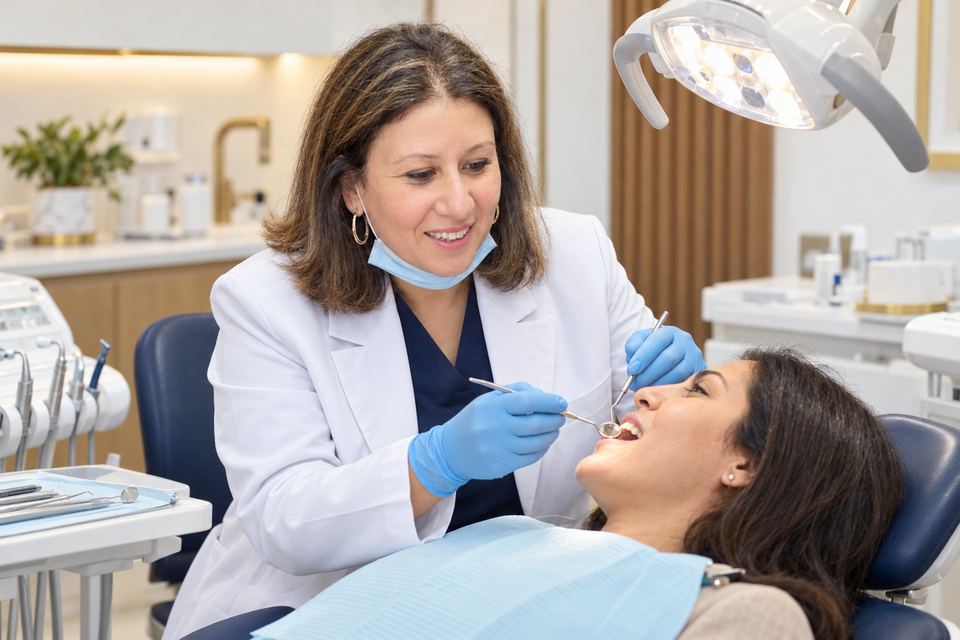
Crowns and bridges are part of prosthodontics, the specialty Prof. Nouran Abdel Nabi researches and practises. At your consultation we typically:
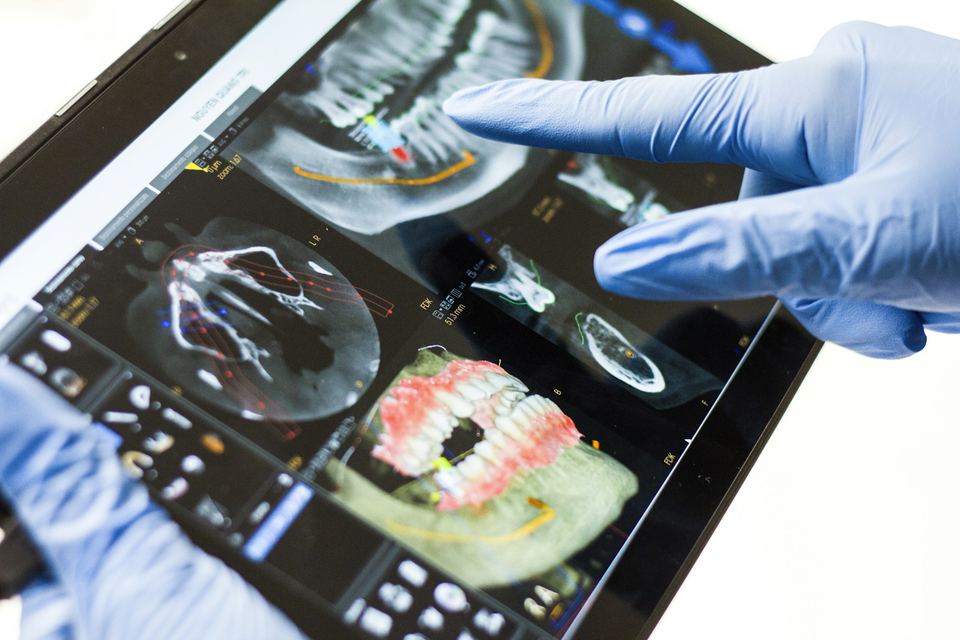
- Examine the tooth and take X-rays to check the root, the nerve and the surrounding bone.
- Assess your bite and look for signs of grinding or clenching.
- Discuss the shade and how visible the tooth is when you smile and speak.
- Explain which materials suit that tooth, with their trade-offs, and give you a written plan.
If a tooth has had a root canal, read do I need a crown after root canal treatment? For more on the treatment itself, see our crowns and bridges page.
When to see a dentist
Book an assessment if you have a cracked or heavily filled tooth, an old crown with a dark line or a bad taste around it, pain when biting, or a crown that feels loose. Early treatment usually means simpler options. You are welcome to message us on WhatsApp with a photo of your smile, though a final recommendation always needs an in-person examination.
Recognise yourself in this?
Send us a message or a photo of your X-ray on WhatsApp. Prof. Nouran will look at your case and give you a clear plan, with no pressure to start.