Short answer
Toothache often feels worse at night because lying down increases pressure in an inflamed tooth and there are fewer distractions. Until you can see a dentist, sleep with your head raised, take an over-the-counter painkiller exactly as the pack label says (ask a pharmacist which suits you), and avoid very hot, cold or sweet food. Facial swelling with fever, or difficulty swallowing or breathing, needs hospital care immediately.

Toothache that keeps you awake is exhausting, and it is a signal worth taking seriously. Pain that throbs at night, wakes you up, or gets worse when you lie down usually means the nerve inside the tooth is inflamed or an infection is building. Home measures can get you through the night, but they do not fix the cause, so plan to see a dentist within a day or two.
Here is what is safe to do tonight, what to avoid, and how to tell whether you need a hospital rather than waiting for the morning.
Why does tooth pain get worse at night?
- Lying flat increases blood flow to the head. Inside a tooth, the inflamed nerve sits in a rigid chamber with no room to swell, so the extra pressure is felt as throbbing.
- Fewer distractions: during the day, work and conversation take your mind off pain; at night it has your full attention.
- Clenching or grinding during sleep can strain a cracked tooth or an inflamed one.
Pain that comes on by itself, lasts minutes or hours, and wakes you from sleep is a typical sign of an irreversibly inflamed nerve (pulpitis). That usually needs root canal treatment or, if the tooth cannot be saved, an extraction.
How to relieve toothache at night until you see a dentist
- Take an over-the-counter painkiller as the label directs. Paracetamol or ibuprofen are commonly used for dental pain. Follow the pack label exactly, never take more than it says, and ask a pharmacist which one is right for you, especially if you are pregnant, take blood thinners, or have stomach, kidney, liver, heart or asthma problems. Children under 16 should not take aspirin.
- Raise your head with an extra pillow to reduce pressure in the tooth.
- Use a cold compress on the cheek (wrapped in a cloth) for 15–20 minutes at a time if there is swelling or throbbing.
- Rinse gently with warm salt water to clean around the tooth (adults only; spit it out).
- Clean the area gently: food trapped between teeth can cause intense pain; use floss carefully.
- A pharmacy numbing gel for the gum may give short relief. Check the label for age and use limits.
- Avoid triggers: very hot, very cold or sugary food and drink, and chewing on that side.
The NHS gives the same self-help steps while you wait for a dentist (NHS: toothache).
What not to do for a toothache
- Do not put an aspirin tablet on the gum or tooth. It does not work there and can cause a painful chemical burn of the gum.
- Do not apply strong substances such as neat clove oil, garlic, alcohol or bleach directly on the gum; they can burn soft tissue.
- Do not put heat on a swollen face.
- Do not take antibiotics left over from a previous illness or ones recommended by a friend. Antibiotics do not treat an inflamed nerve, and for an abscess the cause still has to be treated.
- Do not double up painkillers beyond the label or combine products that contain the same medicine.
Common causes of severe toothache
| Cause | Typical feeling | Usual treatment |
|---|---|---|
| Deep decay reaching the nerve (pulpitis) | Throbbing, spontaneous, worse lying down, lingers after hot or cold | Root canal treatment, sometimes a filling if caught early |
| Tooth abscess | Constant pain, tender to bite, gum or face swelling, bad taste | Drainage plus root canal or extraction |
| Cracked tooth | Sharp pain on biting or releasing | Crown, root canal, or extraction if split |
| Wisdom tooth gum infection | Pain at the back of the jaw, swollen gum, hard to open | Cleaning, then decide on removal |
| Food trapped or gum problem | Pressure and soreness between two teeth | Cleaning; treat gum pocket or faulty filling |
| Grinding or sinus congestion | Dull ache in several upper teeth, worse in the morning | Night guard, or treat the sinus |
Tooth pain after a filling (ألم الأسنان بعد الحشو)
Mild sensitivity to cold or biting for a few days to a couple of weeks after a filling is common, especially after a deep one. Tell your dentist if the filling feels high when you bite, if the pain is getting worse rather than better, or if it starts to throb or wake you at night; that can mean the nerve is inflamed and needs further treatment.
Toothache in pregnancy (ألم الأسنان للحامل)
Do not suffer through it. Dental pain and infection can and should be treated during pregnancy. Some common painkillers are not advised at certain stages of pregnancy, so ask your doctor or pharmacist before taking anything, and tell your dentist you are pregnant. More details are in dental treatment during pregnancy.
When is toothache an emergency?
Go to a hospital emergency department now (do not drive yourself) if toothache comes with:
- Swelling spreading to the eye or neck, or swelling inside the mouth that makes it hard to breathe, swallow or speak.
- High fever, feeling very unwell, or being unable to open your mouth.
See a dentist urgently (within a day) if pain lasts more than two days, is not helped by painkillers, or comes with a swollen gum or cheek, a bad taste, or pain on biting. Read tooth abscess treatment if you suspect an infection, and our dental emergency guide for knocked-out or broken teeth.
How Prof. Nouran treats a painful tooth
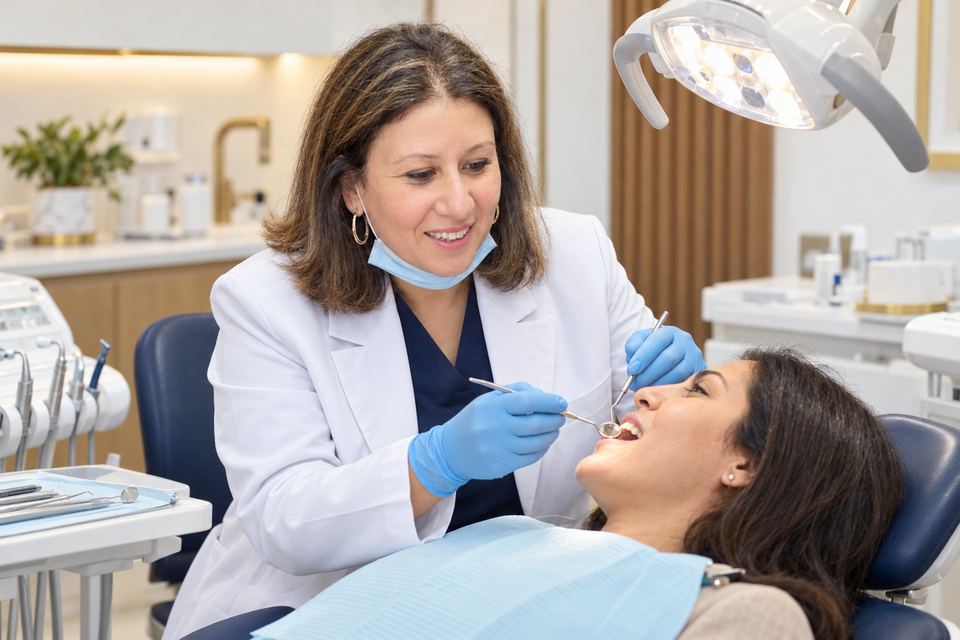
When you finally sit in the chair after a sleepless night, you want two things: relief, and a clear explanation of what is going on. Prof. Nouran examines the tooth herself, takes an X-ray, and tells you plainly what is causing the pain and the options, from root canal treatment to save the tooth to extraction and how the gap would later be restored. You will know the plan and the cost before treatment starts.
If the pain is from the nerve, read is root canal treatment painful? and our root canal treatment page. If you are in pain now, send a short description or a photo on WhatsApp and we will advise you on the first step.
Recognise yourself in this?
Send us a message or a photo of your X-ray on WhatsApp. Prof. Nouran will look at your case and give you a clear plan, with no pressure to start.