Short answer
As of October 2026, public listings in Cairo price in-clinic laser or light-activated whitening at roughly 1,500–8,000 EGP, most often 3,000–7,000 EGP. Dentist-made home whitening trays cost about 800–3,500 EGP, and pharmacy strips about 150–800 EGP. In-clinic whitening is faster; supervised home trays are slower but often give a similar result. Baking soda, charcoal and lemon are not recommended.

As of October 2026, public listings from clinics in Cairo price in-clinic whitening (often called laser or Zoom whitening) at roughly 1,500–8,000 EGP, with most offers between 3,000 and 7,000 EGP. Home whitening with custom trays made by a dentist costs about 800–3,500 EGP, and over-the-counter strips and kits about 150–800 EGP.
The right choice is not simply the most expensive one. It depends on how quickly you want results, how sensitive your teeth are, and whether the stains will respond to whitening at all. The exact cost for you depends on an examination, because some teeth need cleaning, fillings or a different treatment first.
Teeth whitening prices in Egypt by type
| Type | Typical cost (EGP, Cairo listings, Oct 2026) | How it works | Time to result |
|---|---|---|---|
| In-clinic whitening (laser, Zoom or light-activated) | 1,500–8,000 (most 3,000–7,000) | Strong peroxide gel applied by the dentist, gums protected, sometimes with a light | One visit of about 1–2 hours |
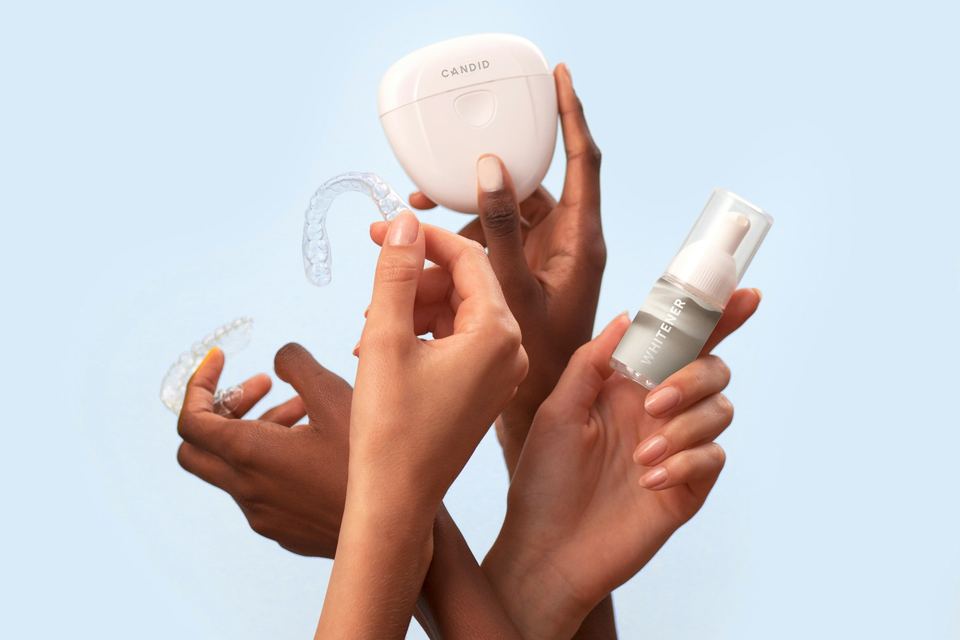
| Home whitening with custom trays | 800–3,500 | Lower-strength gel in trays made for your teeth, worn daily | About 2–6 weeks |
| Combined (in-clinic plus home trays) | Usually the sum of both, sometimes as a package | A quick start in the clinic, then top-ups at home | Fast, with easier maintenance |
| Over-the-counter strips and kits | 150–800 | Weak gel on generic strips or trays | Slow and limited |
What changes the price
- The system and gel used, and whether a light or laser is part of it.
- Whether a scale and polish is needed first. Whitening works poorly through tartar.
- One session or several, and whether home trays are included for maintenance.
- How dark and what type of staining you have.
Laser whitening vs home whitening: which is better for you?
Both use the same active ingredient, hydrogen or carbamide peroxide, which breaks down stain molecules inside the tooth. They differ in strength, speed and control.
In-clinic (laser or Zoom) whitening
The dentist protects your gums and applies a strong gel in short cycles, sometimes with a light. The UK National Health Service describes laser whitening as a single appointment of about one to two hours (NHS: teeth whitening). It suits people who want a visible change quickly, for example before a wedding. Studies disagree on how much the light itself adds to the final shade, so the gel and the dentist's control matter more than the word "laser".
Home whitening with custom trays
The dentist takes impressions and makes thin trays that fit your teeth exactly. You use a lower-strength gel for a set time each day over two to six weeks. It is slower, but often reaches a similar shade, is usually cheaper, and lets you stop for a day or two if your teeth feel sensitive. You can keep the trays for occasional top-ups.
Strips and pharmacy kits
These contain weaker gel and do not fit every tooth evenly, so results are slower and patchier. Kits bought online from unknown sellers may contain unsafe ingredients or strengths and can irritate gums.
How long does teeth whitening last?
Whitening is not a one-time, forever change. Depending on your habits, results typically last from several months to around three years. Tea, coffee, cola and smoking bring stains back sooner. Brushing well, regular cleaning at the dentist and occasional top-ups with home trays help keep the shade.
Is laser teeth whitening harmful? Side effects to expect
Professionally supervised whitening is generally considered safe for healthy teeth and gums. The most common side effects are:
- Sensitivity to cold or sweet things, usually for a day or two. Read more about tooth sensitivity causes and treatment.
- Gum irritation or small white patches if gel touches the gums, which usually settle quickly.
For a detailed look at enamel and safety, see is teeth whitening safe?
Whitening teeth with baking soda, charcoal or lemon: why it is not recommended
Home remedies spread widely on social media, but they do more harm than good:
- Baking soda (بيكربونات): it is abrasive. Scrubbing with it can remove surface stains, but used often or hard it wears enamel, and thinner enamel lets the yellow layer underneath show more.
- Activated charcoal: also abrasive, and the American Dental Association says there is no evidence that charcoal products are safe or effective for whitening.
- Lemon, vinegar and acidic fruits: acid dissolves enamel. Mixing lemon with baking soda combines acid and abrasion, the worst of both.
The ADA advises using a whitening toothpaste with its Seal of Acceptance and talking to your dentist before trying other products (ADA MouthHealthy: natural teeth whitening).
Who should not have teeth whitening, or should wait?
- Pregnant or breastfeeding women: whitening is usually postponed.
- Teenagers under 18: generally not advised for cosmetic reasons.
- Untreated decay, gum disease or exposed roots: treat these first, or whitening can be painful.
- Crowns, veneers, bonding or dentures on front teeth: whitening only lightens natural teeth, so restorations will not change colour and may need replacing to match.
- Grey staining from certain medicines or a dead tooth: may respond poorly; veneers, bonding or internal whitening of that tooth may be more suitable. Our guide on Hollywood smile vs veneers explains these options.
Whitening should be done or supervised by a dentist, not in a beauty centre, so that your teeth and gums are checked first and the gel is used safely.
How Prof. Nouran approaches whitening
Many people want whiter teeth but worry about pain, damaged enamel or paying for something that does not work on their type of stain. At El Nabi Dental Clinic, Prof. Nouran examines your teeth first, checks for decay, gum problems and old fillings that will not change colour, and tells you honestly what shade change is realistic.
She then suggests in-clinic, home or combined whitening based on your teeth and timeline, not on a package. If whitening alone will not give the result you want, she will explain the conservative alternatives. You can read more on our teeth whitening page, or send a photo of your smile on WhatsApp for a first opinion.
Recognise yourself in this?
Send us a message or a photo of your X-ray on WhatsApp. Prof. Nouran will look at your case and give you a clear plan, with no pressure to start.