Short answer
A denture usually becomes loose because the gum and bone beneath it shrink over time. Use a small amount of denture adhesive short term, but see your dentist: a reline can often restore the fit, a worn denture may need remaking, and two implants can hold a persistently loose lower denture firmly in place.

A denture most often becomes loose because the gum and bone underneath it gradually shrink after teeth are lost, while the denture itself stays the same shape. Worn teeth, weight loss, a dry mouth and damage to the denture can also contribute. In the short term, a small amount of denture adhesive can help. The lasting solutions are a reline to refit the denture to your gums, a new denture if it is worn or poorly designed, or, for a persistently loose lower denture, implants to hold it in place.
A loose denture is not just an inconvenience. It can cause sore spots, make eating and speaking harder, and in some cases contribute to inflammation or overgrowth of the gum. Here is how to work out what is going on and what to do about it.
Why dentures become loose
Bone and gum shrinkage
When teeth are removed, the jawbone that held them slowly resorbs. The change is fastest in the first months but continues throughout life, generally more in the lower jaw. A denture that fitted well when it was made gradually loses contact with the ridge.
Healing after recent extractions
If your denture was fitted immediately after extractions, significant shrinkage happens in the first three to six months. Loosening during this period is expected, and a reline is usually planned.
Worn or damaged dentures
Acrylic teeth wear down over the years, which changes the bite and can make the denture tip. A cracked or warped base, often from being dropped or cleaned in hot water, also affects fit.
Other contributing factors
- Significant weight loss, which can change the soft tissues.
- Dry mouth from medications or medical conditions, which reduces suction.
- Changes in muscle control, for example after a stroke or with age.
- A denture that was never well balanced in the bite.
What you can do right now
- Use adhesive sparingly. A few small dabs on a clean, dry denture, not a thick layer. Remove it completely each day.
- Chew on both sides at once and cut food into small pieces to keep the denture balanced.
- Avoid home reline kits. Do-it-yourself relining can change your bite, cause soreness and make professional correction harder.
- Do not bend clasps on a partial denture or try to file the denture yourself.
- Remove the denture at night and keep it clean to reduce gum irritation and fungal infection.
If you find you need more and more adhesive, that is a sign the fit has changed and the denture needs professional attention.
Professional solutions for a loose denture
| Solution | What it involves | When it suits |
|---|---|---|
| Adjustment | Small changes to edges or the bite | Minor rocking, sore spots, new dentures |
| Soft (temporary) reline | A cushioning layer added chairside | Sore or inflamed gums, healing after extractions, while implants heal |
| Hard reline | The fitting surface is renewed to match your current gums | Denture in good condition but loose due to shrinkage |
| Rebase or new denture | The base or the whole denture is remade | Worn teeth, damaged base, poor bite or appearance |
| Implant-retained overdenture | Two or more implants with attachments that clip the denture in | Persistently loose lower denture, significant bone loss, low confidence eating |
Relining vs a new denture
A reline is usually a good option when the denture is relatively recent, the teeth are not worn, and the appearance and bite are still right. It reshapes the fitting surface to your current gum contours. If the denture is many years old, the teeth are flattened, or you are unhappy with how it looks, a new denture is often better value, because relining an otherwise worn denture does not fix the bite or appearance.
When implants are the answer
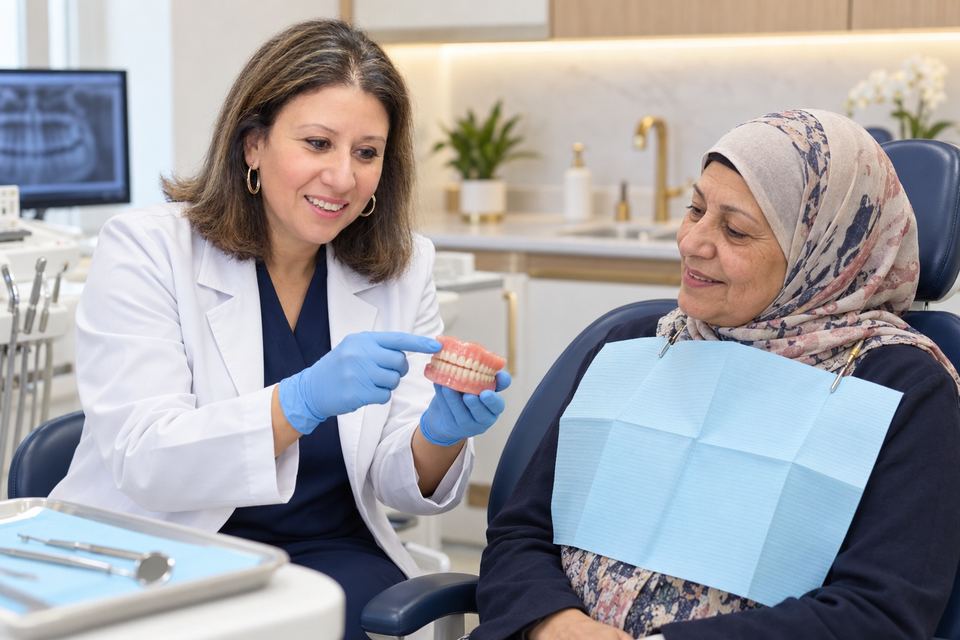
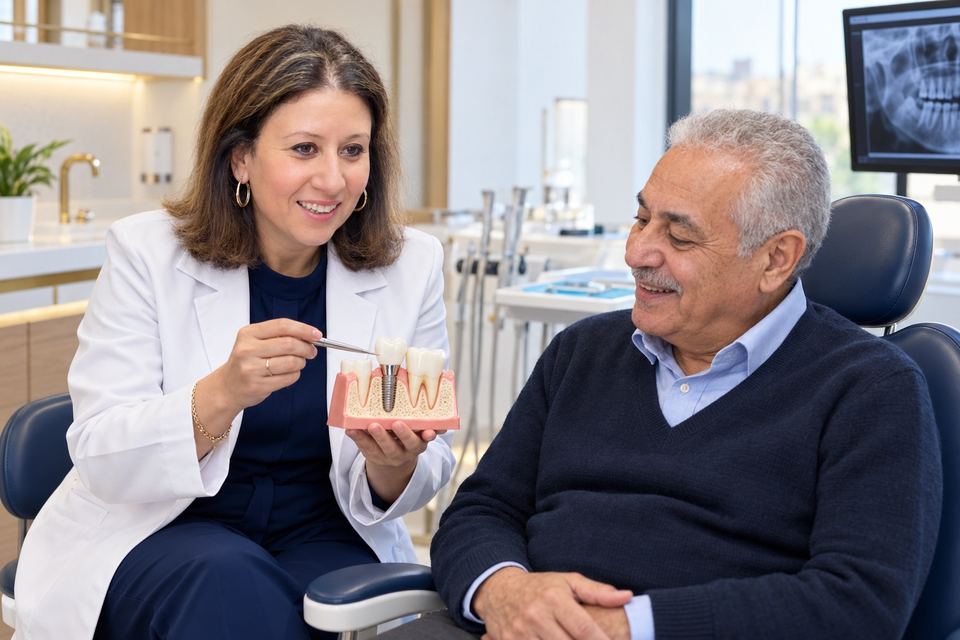
For many people, especially with a lower denture, no amount of relining fully solves the problem because there is simply too little ridge left to hold onto. In these cases, placing two implants in the front of the lower jaw and fitting attachments to the denture changes it from something that floats to something that clips firmly in place. This is called an implant-retained overdenture, and it is the focus of Prof. Nouran Abdel Nabi's published research. Often your existing denture can even be converted, if it is in good condition.
Implants require minor surgery and are not suitable for everyone. Uncontrolled diabetes, heavy smoking, jaw radiotherapy and certain bone medications need careful assessment. See am I a candidate for dental implants?
Signs you should not wait
- A sore or ulcer that does not heal within two weeks.
- Red, swollen or white patches under the denture.
- Folds of extra gum tissue forming along the denture edge.
- Cracks in the denture base or teeth coming loose.
- Difficulty eating enough or unintended weight loss.
Any long-lasting sore under a denture should be examined, both to fix the fit and to rule out other problems.
How we treat loose dentures at El Nabi
At our clinic in Maadi, Prof. Nouran Abdel Nabi examines the denture and your gums, checks the bite and assesses how much ridge remains. We then explain the realistic options, from a simple adjustment or reline to a new denture or implant retention, with their costs, number of visits and limitations. Our dentures page describes the types of dentures we make.
When to see a dentist
If your denture moves when you eat or speak, if you rely on increasing amounts of adhesive, or if it has been more than a few years since your last denture check, it is worth booking a review. You can message us on WhatsApp to arrange a visit.
Recognise yourself in this?
Send us a message or a photo of your X-ray on WhatsApp. Prof. Nouran will look at your case and give you a clear plan, with no pressure to start.