Short answer
Professional teeth whitening is generally safe when a dentist checks your teeth first and supervises the treatment. Peroxide gels lighten stains inside the tooth without removing enamel. The most common side effects are temporary sensitivity and gum irritation. Whitening does not change crowns, veneers or fillings, and it is not advised during pregnancy or with untreated decay.

Teeth whitening is one of the most requested cosmetic treatments in Cairo, and one of the most misunderstood. Some people worry it "thins" the enamel; others buy strong products online or try home remedies that can genuinely cause harm. This page explains how whitening works, what the real risks are, and how to whiten safely.
How teeth whitening works
Professional whitening uses a gel containing hydrogen peroxide or carbamide peroxide (which releases hydrogen peroxide). The peroxide passes through the enamel and breaks down stain molecules inside the tooth, making the tooth look lighter. It does not sand or scrape the surface, and when used correctly it does not remove enamel.
This is different from "whitening" toothpastes and powders, which mainly remove surface stains through mild abrasion. Over-abrasive products, including charcoal powders and lemon or baking soda mixtures, can wear enamel over time and are not recommended.
Is whitening safe for enamel?
Research on supervised whitening with appropriate concentrations shows no meaningful long-term damage to healthy enamel. Some studies show small, temporary changes in the surface that recover with saliva and fluoride. The main safety concerns arise from very high concentrations used without supervision, poorly fitting trays that leak gel onto the gums, and whitening over decay or exposed roots. The NHS advises that whitening should only be carried out by a dentist or another regulated dental professional (NHS: teeth whitening).
Common side effects
- Tooth sensitivity: the most common effect, usually mild and temporary, lasting a day or a few days. Desensitising toothpaste and spacing out sessions help.
- Gum irritation: white patches or soreness where gel touched the gum, usually settling within a day or two.
- Uneven results: white spots may look more noticeable at first; they often blend as the colour settles.
Who should not whiten, or should wait
- Pregnant or breastfeeding women: there is little safety data, so whitening is usually postponed. See dental treatment during pregnancy.
- Children and young teenagers.
- Anyone with untreated decay, cracked teeth, leaking fillings or active gum disease; these should be treated first.
- People with exposed roots or severe existing sensitivity, who may need a gentler plan.
- People with known allergy to peroxide or tray materials.
Whitening will not change crowns, veneers or fillings
Peroxide only lightens natural tooth. Existing crowns, veneers and tooth-coloured fillings stay the same colour, so after whitening they may look darker than the surrounding teeth. If you have visible restorations at the front, we plan whitening first and then replace any restorations that no longer match, if you wish. Some stains, such as deep grey tetracycline staining or a tooth darkened after trauma, respond poorly; these may need internal whitening of a root-treated tooth, or veneers.
In-clinic vs home whitening vs over-the-counter kits
| Option | How it works | Pros | Cons |
|---|---|---|---|
| In-clinic (office) whitening | Higher-concentration gel applied by the dentist with gum protection, usually in one long session | Fast visible change; gums protected; supervised | Sensitivity more likely; colour may relapse a little in the first days |
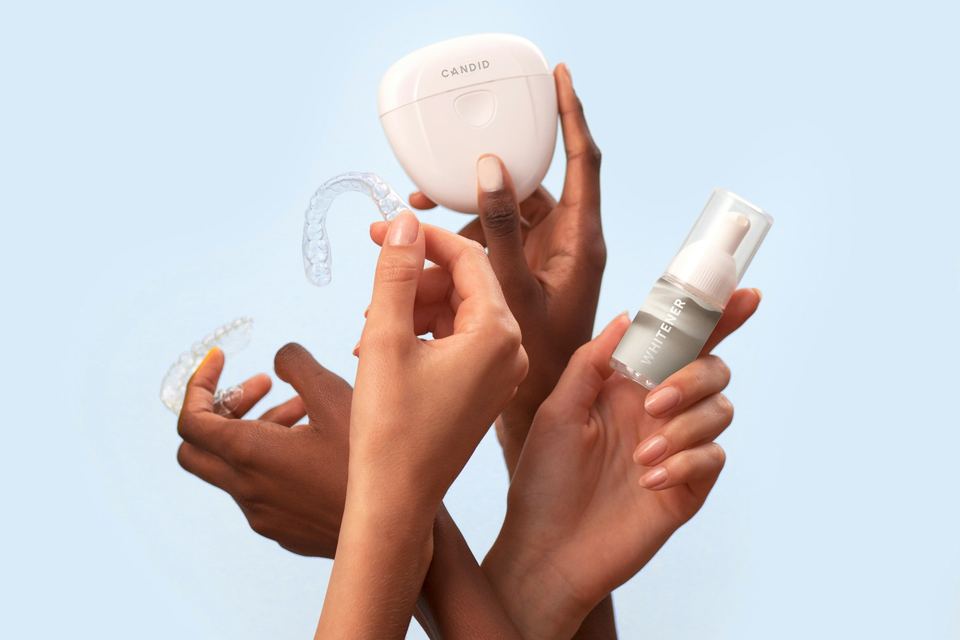
| Dentist-supervised home whitening | Custom trays and lower-concentration gel worn for set periods over 1–3 weeks | Gradual, controllable, often more stable; easy top-ups | Needs daily commitment |
| Over-the-counter strips and kits | Low-concentration gel with generic trays or strips | Low cost | Weaker results; poor fit can irritate gums; no check for decay first |
Many patients get the most predictable result from combining an in-clinic session with home trays for maintenance.
How long do results last?
Results typically last from several months to a few years, depending on diet and habits. Tea, coffee, cola, red sauces and smoking bring stains back faster. Home trays allow occasional short top-ups. Whitening in Cairo is commonly listed at around 2,500 to 6,000 EGP depending on the method; the exact cost depends on an examination.
Common whitening myths
- "Whitening makes teeth weak." Supervised whitening does not weaken healthy teeth or make them more likely to break.
- "Whiter is always better." Very bright, opaque white often looks artificial. A natural result usually matches the whites of your eyes and suits your skin tone.
- "Home remedies are natural, so they are safe." Lemon juice is acidic and dissolves enamel; abrasive powders scratch it. These can make teeth look more yellow over time as enamel thins.
- "One session lasts forever." Stains return gradually, so expect occasional maintenance.
What happens at El Nabi
Before any whitening at our Maadi clinic, we:
- Examine your teeth and gums and check for decay, cracks and exposed roots.
- Clean the teeth (scaling and polishing) so the gel reaches the enamel evenly.
- Record your starting shade so you can see the change objectively.
- Recommend in-clinic, home, or combined whitening based on your sensitivity, goals and timeline.
- Explain how to manage sensitivity and which foods to limit for the first 48 hours.
If whitening is not enough to reach your goal, we will say so honestly and discuss options such as bonding or veneers. Details of the treatment are on our teeth whitening page.
Tips to reduce sensitivity
- Use a toothpaste for sensitive teeth for one to two weeks before and during whitening.
- Do not exceed the wear time your dentist sets; longer is not better.
- Skip a day if sensitivity builds up, then continue.
- Avoid very hot or cold drinks for a day after in-clinic sessions.
When to see a dentist
Stop whitening and contact a dentist if you have strong or lasting pain, gum sores that do not heal within a few days, or a single tooth that becomes much more sensitive than the others, which can signal a crack or a leaking filling. If you are considering whitening, a short check-up first is the safest start; you can also message us on WhatsApp with questions.
Recognise yourself in this?
Send us a message or a photo of your X-ray on WhatsApp. Prof. Nouran will look at your case and give you a clear plan, with no pressure to start.