Short answer
For most patients, root canal treatment feels similar to having a filling, because the tooth is fully numbed with local anaesthetic. The severe pain people associate with root canals usually comes from the infection before treatment, not the procedure. Mild soreness for a few days afterwards is common and is usually managed with simple painkillers.

"Root canal" may be the most feared phrase in dentistry. Yet the treatment exists to relieve pain, not cause it. Modern local anaesthetics, careful technique and good planning mean that most patients find the procedure much easier than they expected. This page explains what you are likely to feel before, during and after root canal treatment (حشو العصب), and when it may not be the right option.
Why does a tooth need root canal treatment?
Inside every tooth is the pulp, a soft tissue containing nerves and blood vessels. Deep decay, a crack, a large old filling or a blow to the tooth can let bacteria reach the pulp. The pulp then becomes inflamed (pulpitis) or dies and becomes infected, sometimes forming an abscess at the root tip.
Root canal treatment removes the inflamed or infected pulp, cleans and disinfects the narrow canals inside the roots, and seals them. The goal is to keep your natural tooth rather than extract it.
Where the pain really comes from
The throbbing toothache, pain that wakes you at night, and sensitivity to hot drinks that lingers for minutes are symptoms of an inflamed or infected pulp. That is the pain people often remember and later associate with the treatment itself. Removing the source of inflammation is what brings relief.
What you feel during the procedure
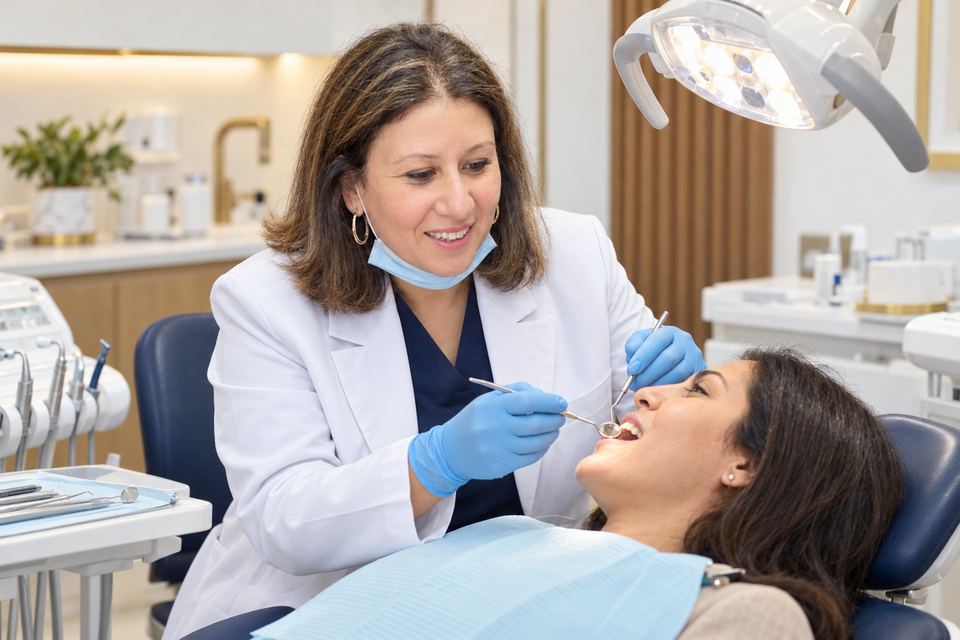
Before starting, the dentist numbs the tooth and surrounding area with local anaesthetic. Most patients feel the small pinch of the injection and then pressure and vibration, but not sharp pain. A thin rubber sheet (rubber dam) is usually placed around the tooth to keep it clean and dry and to stop solutions entering your mouth.
There is one honest exception. A very inflamed "hot" tooth, especially a lower molar, can be harder to numb fully. If you feel sharp pain at any point, tell the dentist; additional anaesthetic techniques can be used, and treatment can pause. You should never be expected to "push through" pain.
How long does it take?
Depending on the tooth and how infected it is, treatment may be completed in one visit or spread over two or more. Front teeth usually have one canal; molars may have three or four, with curved or narrow canals that take longer. Typical appointments last around 60 to 90 minutes.
After treatment: what is normal?
| What you may notice | Is it normal? | What to do |
|---|---|---|
| Numb lip or tongue for a few hours | Yes | Avoid hot drinks and chewing until feeling returns |
| Tenderness when biting for 2–5 days | Common | Simple painkillers as advised; chew on the other side |
| Mild ache that steadily improves | Common | Follow instructions; it should ease day by day |
| Severe pain that is getting worse after 3 days | Not typical | Contact the clinic |
| Swelling of the face or gum, or fever | Not typical | Contact the clinic promptly; seek urgent care if swelling spreads |
| Temporary filling feels rough or a piece breaks | Can happen | Contact the clinic to replace it; it protects the tooth |
Antibiotics are not needed for most root canal treatments. They do not cure an infection inside the tooth; cleaning the canals does. They may be prescribed if there is spreading swelling or you are unwell.
Does root canal treatment work?
Root canal treatment has good success rates when canals are well cleaned and sealed and the tooth is properly restored afterwards. Success is lower when a tooth is cracked into the root, when infection has been present for a long time, or when the final filling or crown leaks. A tooth with a vertical root fracture usually cannot be saved.
The NHS describes the procedure, recovery and the importance of the final restoration in its patient guidance (NHS: root canal treatment).
Who may not be a good candidate
- Teeth with too little remaining structure to restore.
- Teeth with a vertical crack extending into the root.
- Teeth with advanced gum disease and severe bone loss around them.
- In some cases, teeth whose treatment would be very complex compared with the value of keeping them in the overall plan.
The alternative: extraction
The main alternative is to remove the tooth. Extraction is sometimes the right choice, but it leaves a gap. Neighbouring teeth can drift, and chewing efficiency may drop. Replacing the tooth later with an implant, bridge or partial denture usually involves more time and cost than saving it. Leaving an infected tooth untreated is not a safe option: the infection can spread.
Will I need a crown afterwards?
Back teeth that have had root canal treatment are usually more prone to fracture and often need a crown or onlay to protect them. Front teeth with little tooth loss may only need a filling. Read do I need a crown after root canal?
How we approach root canal treatment at El Nabi
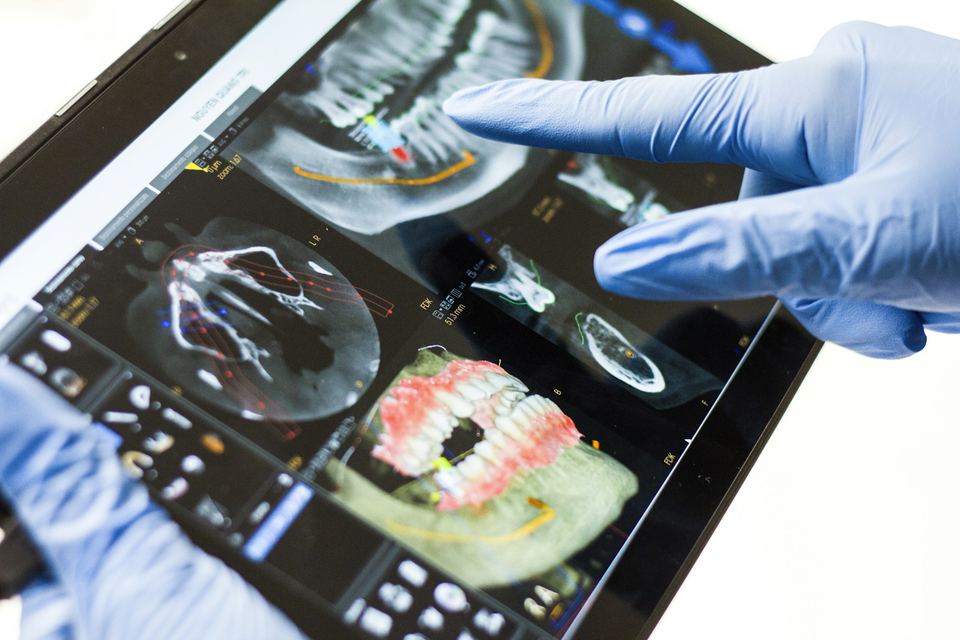
At our clinic in Maadi, we start with an examination and X-rays to confirm the diagnosis and check whether the tooth can be restored afterwards. We explain the plan, the number of visits, the expected outcome and the alternatives before any treatment begins. We take time with anaesthesia, check you are comfortable throughout, and agree a hand signal so you can ask us to pause.
Because the long-term success of a root-treated tooth depends heavily on how it is restored, we plan the final filling or crown from the start. See our root canal treatment page for more details.
Tips for a more comfortable experience
- Eat a light meal beforehand, as you may be numb for a few hours afterwards.
- Tell us about your medical history and any medicines, including blood thinners.
- If you feel anxious, say so. Breaks, explanations and a slower pace help many people.
- Do not delay. Treating early, before swelling develops, is usually easier and more comfortable.
When to see a dentist
See a dentist soon if you have toothache that lingers after hot or cold, pain that wakes you at night, pain on biting, a gum "pimple" near a tooth, or a tooth that has darkened. Facial swelling, fever or difficulty swallowing need urgent care; see what to do in a dental emergency. You can message us on WhatsApp to arrange an assessment.
Recognise yourself in this?
Send us a message or a photo of your X-ray on WhatsApp. Prof. Nouran will look at your case and give you a clear plan, with no pressure to start.