Short answer
You may need a bone graft if your jawbone is too thin or short to hold an implant securely, which is common after tooth loss. A sinus lift adds bone under the sinus floor in the upper back jaw. A 3D scan shows whether either is needed; shorter or angled implants can sometimes avoid grafting.

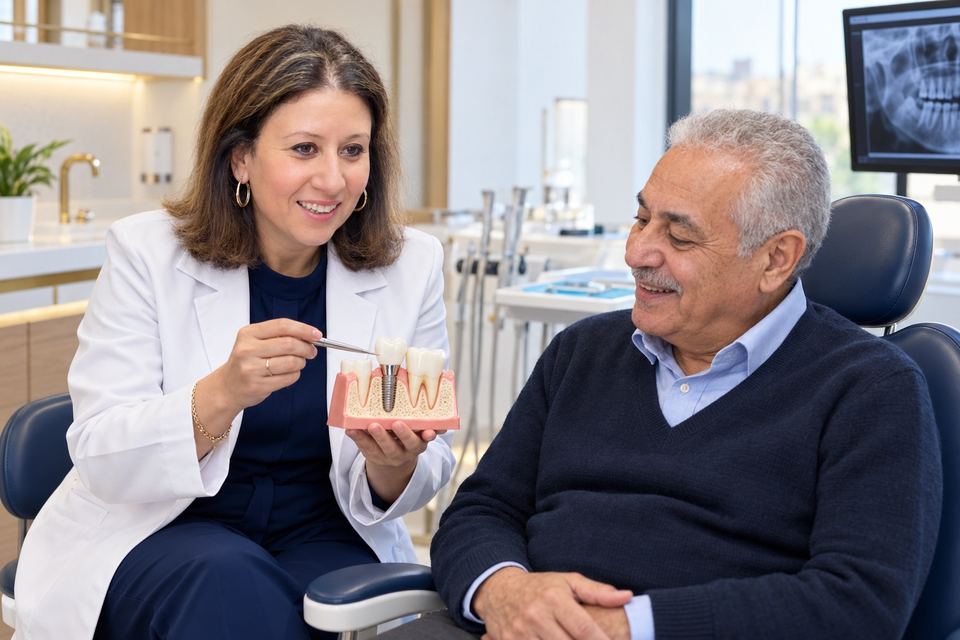
You may need a bone graft if the jawbone where the tooth used to be has become too thin or too short to hold an implant securely. This is common, because bone that no longer supports a tooth gradually shrinks, especially in the first months after an extraction. A sinus lift is a specific type of graft for the upper back jaw: it gently raises the floor of the sinus and places graft material beneath it, creating height for an implant. Whether you need either is decided from a 3D scan, and in some cases shorter or angled implants can avoid grafting altogether.
Hearing that you need a graft can feel like bad news, but these procedures are routine parts of implant dentistry. Here is what they involve, how long they add to treatment, and what the alternatives are.
Why the jawbone shrinks after tooth loss
The bone that surrounds a tooth root exists to support that tooth. When the tooth is removed, the body begins to remodel that bone. Width is often lost faster than height, and in the upper back jaw the sinus can expand downwards at the same time. Gum disease, infections, difficult extractions and long-term denture wear can all add to the loss.
Types of bone grafting for dental implants
| Procedure | When it is used | Typical timing |
|---|---|---|
| Socket preservation | At the time of extraction, to limit shrinkage | Implant often 3–4 months later |
| Minor graft at implant placement | Small areas of thin bone around the implant | Done at the same appointment |
| Ridge augmentation (block or guided bone regeneration) | Significant loss of width or height | Often 4–9 months before the implant |
| Internal (crestal) sinus lift | Upper back jaw with moderate height shortage | Usually done with the implant |
| Lateral window sinus lift | Upper back jaw with very little height | Implant same day or about 6–9 months later |
What graft materials are used?
Graft material can come from your own body, from processed human or animal bone, or from synthetic materials. Processed and synthetic materials are widely used because they avoid a second surgical site. Many grafts are covered with a membrane that protects the area while new bone grows into the scaffold. Your dentist should explain which material is planned and why.
What a sinus lift involves
The maxillary sinuses are air spaces above the upper back teeth. When those teeth are lost, there may be only a few millimetres of bone between the mouth and the sinus. A sinus lift creates room without entering the sinus itself.
Internal (crestal) sinus lift
Through the same opening prepared for the implant, the sinus floor is gently tapped upward and a small amount of graft is added. It is less invasive and usually suitable when a moderate gain in height is needed.
Lateral window sinus lift
A small window is made in the side of the upper jaw, the sinus membrane is carefully lifted, and graft material is placed underneath. It allows a larger gain in height. Swelling is more noticeable, and you will be asked to avoid nose-blowing and pressure changes for a time.
Does bone grafting hurt?
Grafting is done under local anaesthetic. Small grafts done with an implant usually feel much like the implant procedure itself. Larger grafts and lateral sinus lifts generally bring more swelling and soreness for several days, sometimes with bruising. Most people manage with prescribed medication and a few days of rest. See do dental implants hurt? for what recovery typically feels like.
Risks of bone grafting and sinus lifts
- Infection or graft exposure, which may mean part of the graft is lost.
- Incomplete bone formation, sometimes requiring a second graft or a change of plan.
- Sinus membrane perforation during a sinus lift, which is usually repaired during the procedure but may delay treatment.
- Sinus congestion or infection after a sinus lift, uncommon but possible.
- Longer overall treatment and added cost.
Smoking and uncontrolled diabetes increase these risks significantly. The success of grafting also depends on careful technique and following aftercare instructions closely.
Can grafting be avoided?
Sometimes. Options that may reduce or avoid grafting include:
- Short implants, which have good research support in selected cases.
- Narrow implants where width is limited and forces are low.
- Tilted implants in full-arch designs, as described in All-on-4 vs All-on-6.
- An implant-retained overdenture using implants in the front of the lower jaw, where bone is often still adequate.
- A bridge or denture if surgery is not suitable or preferred.
Grafting is not a goal in itself. The question is always which approach gives a stable, cleanable result with the least treatment burden for you.
How grafting affects cost and timeline
Grafting adds material costs, surgical time and, often, extra months of healing. It is one of the main reasons two implant quotes can differ, which we explain in how much do dental implants cost in Cairo? Socket preservation at the time of extraction can, in suitable cases, reduce the need for larger grafts later.
How we approach grafting at El Nabi
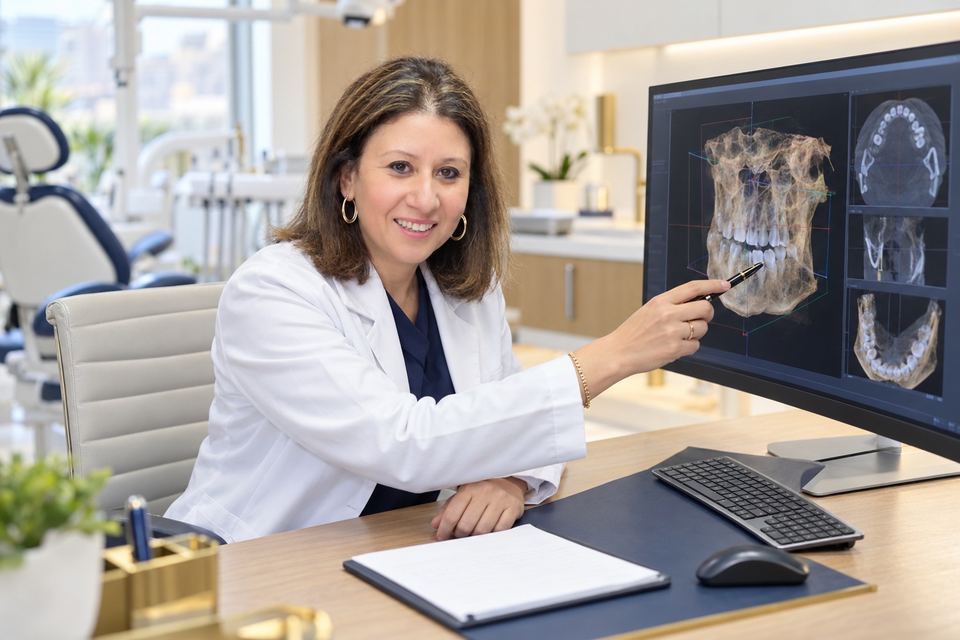
At our clinic in Maadi, Prof. Nouran Abdel Nabi reviews your 3D scan with you, showing where bone is adequate and where it is lacking. We explain whether grafting is truly needed, what type, and whether an alternative design could avoid it. The aim is the simplest plan that will give a reliable result, and you are told in advance about the healing time, risks and aftercare.
Aftercare tips after a graft or sinus lift
- Do not smoke during healing.
- Avoid pressing on the area with your tongue or a denture unless it has been adjusted.
- After a sinus lift, sneeze with your mouth open and avoid blowing your nose for the period advised.
- Take medications exactly as prescribed and attend review visits.
When to see a dentist
If a tooth needs to be removed and you may want an implant later, ask about socket preservation before the extraction. If you have been told you need a graft and want to understand your options, we are happy to review your scan. You can message us on WhatsApp or book through our contact page.
Recognise yourself in this?
Send us a message or a photo of your X-ray on WhatsApp. Prof. Nouran will look at your case and give you a clear plan, with no pressure to start.