Key takeaways
- The first 48 hours are about protecting the blood clot: no rinsing, spitting, straws or smoking.
- Swelling usually peaks around day 2–3 and then settles; worsening after day 3 needs a call.
- Eat soft, lukewarm foods such as lentil soup and mashed foul, and avoid nuts, seeds and hard bread crusts while healing.
- Smoking and shisha raise the risk of implant problems in both the short and the long term.
- Implants cannot decay, but the gum and bone around them can become infected; daily cleaning and regular reviews prevent most problems.
Many patients are surprised by how manageable implant surgery feels on the day. The part that decides how well your implant does is what follows: the first two days at home, the weeks of healing, and the cleaning habits you keep for years afterwards.
This guide gives you a practical timeline, from the moment you leave the chair to your ten-year check-up, using foods and habits that fit everyday life in Egypt. Your dentist's specific instructions always come first, because they are based on your surgery, your health and any grafting that was done.
The first 48 hours: protect the clot
After an implant is placed, a blood clot forms over the site. That clot is the foundation of healing, and most first-day advice exists to protect it.
The first few hours
- Bite gently on the gauze for about 30–60 minutes. Some oozing for the rest of the day is normal; a pink tinge in saliva is not a cause for alarm.
- Do not rinse, spit forcefully or use a straw. Suction and rinsing can dislodge the clot.
- Use a cold compress on the cheek, about 15–20 minutes on and 15–20 minutes off, during the first day to limit swelling.
- Take medication as prescribed, ideally starting pain relief before the anaesthetic fully wears off. Complete any antibiotic course you were given.
- Rest with your head raised on an extra pillow for the first night.
Day 1 to day 2
- Avoid hot drinks, including tea, for the first day; lukewarm is fine.
- Skip the gym and heavy lifting for at least 48–72 hours, as exertion can restart bleeding.
- Brush the rest of your teeth gently, keeping the brush away from the surgical site.
- From the day after surgery, start gentle warm salt-water rinses (half a teaspoon of salt in a glass of warm water), letting the water fall from your mouth rather than spitting, unless your dentist advises otherwise.
If you want to know what level of discomfort to expect, our answer on whether dental implants hurt explains typical recovery.
The first week, day by day
| Day | What is normal | What to do |
|---|---|---|
| Day 0 (surgery) | Numbness, mild oozing, early swelling | Gauze, cold compress, soft cool foods, rest |
| Day 1 | Soreness, swelling building | Pain relief as prescribed, salt-water rinses, no smoking |
| Day 2–3 | Swelling and sometimes bruising at their peak | Switch from cold to warm compresses if advised; keep eating soft |
| Day 4–5 | Swelling and pain settling | Gentle brushing closer to the site with a soft brush; prescribed mouthwash if given |
| Day 6–7 | Feeling largely normal; stitches may feel loose | Keep chewing on the other side; attend your review |
| Day 7–14 | Gum healing over or around the implant | Stitch removal or check if needed; gradually widen your diet |
If you had a bone graft or sinus lift, healing can take a little longer and you may receive extra instructions, such as avoiding blowing your nose forcefully after a sinus lift.
What to eat after a dental implant: an Egyptian food guide
Good nutrition helps healing, so do not skip meals. The goal is food that is soft, lukewarm and unlikely to leave hard fragments near the site. Chew on the opposite side until your dentist says otherwise.
Usually fine in the first week
- Lentil soup (shorbet ads) and smooth vegetable soups, served lukewarm.
- Well-mashed foul medames, without crunchy toppings.
- Yoghurt, labneh, soft white cheese and scrambled or boiled eggs.
- Soft rice, well-cooked pasta and mashed potatoes.
- Roz bel laban, mehalabeya and other soft desserts, in moderation.
- Soft cooked vegetables, such as courgettes or molokhia (lukewarm, not hot).
- Bananas, ripe mango and other soft fruit.
Avoid until your dentist confirms healing
- Nuts, lib (roasted seeds) and sesame-topped bread: fragments lodge in the wound.
- Hard bread crusts, baladi bread edges, rusks (bksomat) and crispy feteer.
- Crunchy ta'meya shells, chips and other hard fried snacks.
- Roasted corn on the cob and sugar cane, which load the area heavily.
- Very hot tea, coffee and soups in the first 24 hours.
- Very spicy or acidic food, which can sting the healing gum.
- Alcohol, which can interfere with healing and medication.
Once a final crown is fitted and your dentist is happy, most patients can return to a normal diet. Even then, cracking hard shells with your teeth or chewing ice is a habit worth dropping for good, for implants and natural teeth alike.
Cleaning your implant: tools that actually help
An implant cannot decay, but the gum and bone around it can become inflamed if plaque is left there. Implant cleaning is therefore mostly about the area where the crown meets the gum.
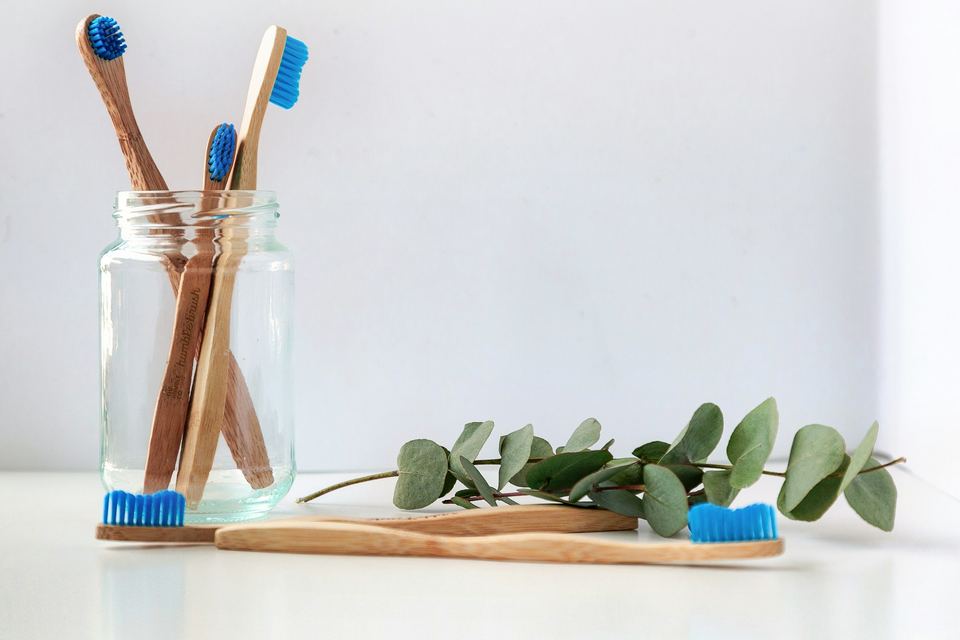
- Soft toothbrush (manual or electric), angled towards the gum line, twice a day.
- Interdental brushes in the right size for the gaps around your implant; your dentist or hygienist can size them.
- Super floss or implant floss, with a stiffened end and a spongy section, useful around bridges and implant crowns.
- Single-tuft brush for hard-to-reach areas, especially around back implants.
- Water flosser, helpful for many patients with implant bridges or full-arch restorations, as an addition to brushing rather than a replacement.
- Low-abrasive toothpaste; very abrasive whitening pastes can scratch some restoration surfaces.
If you have a full-arch fixed bridge or an implant-retained overdenture, cleaning is more involved. Ask for a demonstration with your own restoration in place; patients who practise once in the clinic tend to clean far more effectively at home.
Smoking, shisha and your implant
Smoking reduces blood flow to the gums and slows healing. Research consistently links it with higher rates of early implant failure and of long-term bone loss around implants. Shisha is not a safer alternative: it involves prolonged inhalation of smoke and similar risks.
At a minimum, avoid smoking for the first 72 hours, when the clot is most vulnerable. Many dentists recommend stopping for at least two weeks before and several weeks after surgery, and ideally stopping altogether. If quitting fully is not realistic right now, every cigarette avoided during healing helps.
Warning signs: when to contact your dentist
Some discomfort and swelling are expected. Contact your clinic promptly if you notice:
- Bleeding that does not slow after 30 minutes of firm pressure on gauze.
- Swelling or pain that is getting worse after day 3 rather than better.
- Fever, a bad taste, or pus from the site.
- Numbness of the lip, chin or tongue that persists after the anaesthetic should have worn off.
- A temporary tooth or healing cap that becomes loose.
- Any sense that the implant itself moves.
- Difficulty swallowing or breathing, or swelling spreading towards the eye or neck: seek urgent medical care.
Our guide on what to do in a dental emergency covers first aid while you arrange to be seen.
Months 1 to 6: integration
While you get on with life, the bone is bonding to the implant surface, a process called osseointegration. In the lower jaw this commonly takes around 2–4 months, and in the upper jaw or grafted bone often 3–6 months. Some patients receive a temporary tooth on the day of surgery; even so, it should be treated gently and not used for heavy biting until integration is confirmed.
During this period, keep any removable temporary denture clean and do not let it press on the implant site; tell your dentist if it rubs. Attend each review so the gum shape and healing can be checked before the final crown is made.
Years 1 to 10: long-term maintenance
Implants have high long-term success rates in studies, but they are not maintenance-free. Many patients keep their implants for decades; how long yours lasts depends on your health, your bite and your habits. Our answer on how long dental implants last covers the factors in more detail.
A typical maintenance rhythm
- A review a few months after the final crown to check the bite and the gum around it.
- Check-ups and professional cleaning about every 6 months, sometimes every 3–4 months if you have a history of gum disease, diabetes or a full-arch restoration.
- X-rays at intervals chosen by your dentist, to compare bone levels around the implant over time.
- Bite checks, because natural teeth shift slightly over the years while implants do not.
- A night guard if you grind or clench, to protect the crown and the screw connection.
Preventing peri-implantitis
Peri-implantitis is inflammation of the gum and bone around an implant, the implant equivalent of gum disease. It often starts quietly as peri-implant mucositis: bleeding and redness of the gum only, which is usually reversible with better cleaning and professional care. If ignored, it can progress to bone loss around the implant.
Risk factors
- A history of gum disease (periodontitis).
- Smoking and shisha.
- Poorly controlled diabetes.
- Plaque build-up from irregular cleaning.
- Excess cement left under a cemented crown, or a crown shape that is hard to clean.
- Missing maintenance visits.
Early signs to watch for
- Bleeding when you brush or clean around the implant.
- Red or swollen gum, or a gum that is pulling back to show metal.
- Bad taste or pus near the implant.
- Food packing around the crown more than before.
Caught early, these signs are usually manageable. Treatment can include professional cleaning around the implant, improved home care, antiseptic or antibiotic therapy in some cases, and, in more advanced cases, surgical treatment. Prevention is far simpler than repair.
Your aftercare checklist
- Protect the clot for 48 hours: no rinsing, spitting, straws, hot drinks or smoking.
- Use cold compresses on day one and keep your head raised.
- Take medication exactly as prescribed.
- Eat soft, lukewarm food and chew on the other side.
- Begin gentle salt-water rinses from the day after surgery, unless advised otherwise.
- Watch for warning signs and call early rather than late.
- Learn to use interdental brushes or implant floss once the site has healed.
- Attend every review, including the ones when nothing feels wrong.
Next step
Good aftercare starts with a clear plan before surgery, so you know exactly what to expect at each stage. At our clinic in Maadi, Prof. Nouran Abdel Nabi, a Cairo University professor of prosthodontics whose published work focuses on implant-supported dentures, plans each implant case with long-term maintenance in mind.
If you are considering dental implants, or already have implants and would like a maintenance check, book a consultation or message us on WhatsApp with your questions.
Recognise yourself in this?
Send us a message or a photo of your X-ray on WhatsApp. Prof. Nouran will look at your case and give you a clear plan, with no pressure to start.